
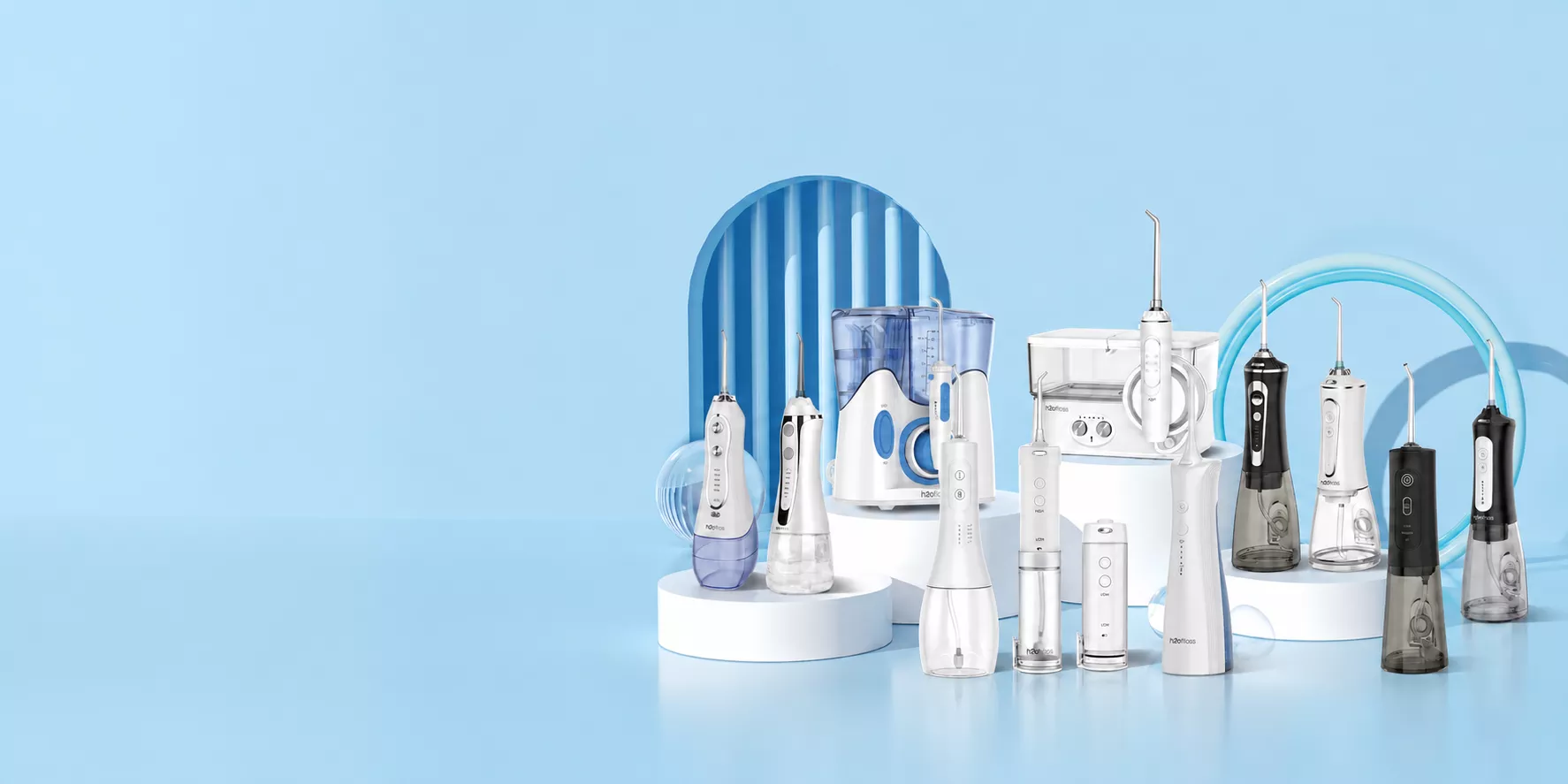
An electric water flosser works by pumping water from its tank through a narrow tip. The jet helps flush trapped food from between teeth and along the gumline; in a pulsating model, its pressure rises and falls rapidly during operation.
The explanation below covers electric water flossers with a reservoir. Faucet attachments and devices that deliver bursts of air and liquid can work differently.
How Do Water Flossers Work?
Electric water flossers combine a reservoir, a powered pump and a nozzle. Water leaves the tank, passes through the pump and internal tubing, then exits the tip as a focused stream. You guide that stream around the teeth while the used water drains into the sink.
| Part | What It Does |
|---|---|
| Reservoir | Stores the water available for the cleaning session. |
| Motor and pump | Use electrical power to move water through the device and generate pressure. |
| Water passage or hose | Carries water from the pump toward the outlet. |
| Nozzle or tip | Directs the stream toward the area you want to clean. |
Moving the tip matters because the stream acts where you aim it. Simply holding the nozzle in one place leaves other areas untreated. A larger reservoir gives you more stored water, but the time before refilling also depends on how quickly the device uses it.
For the practical differences between battery-powered and plug-in formats, read our cordless vs corded water flosser comparison.
Why Water Flossers Pulse
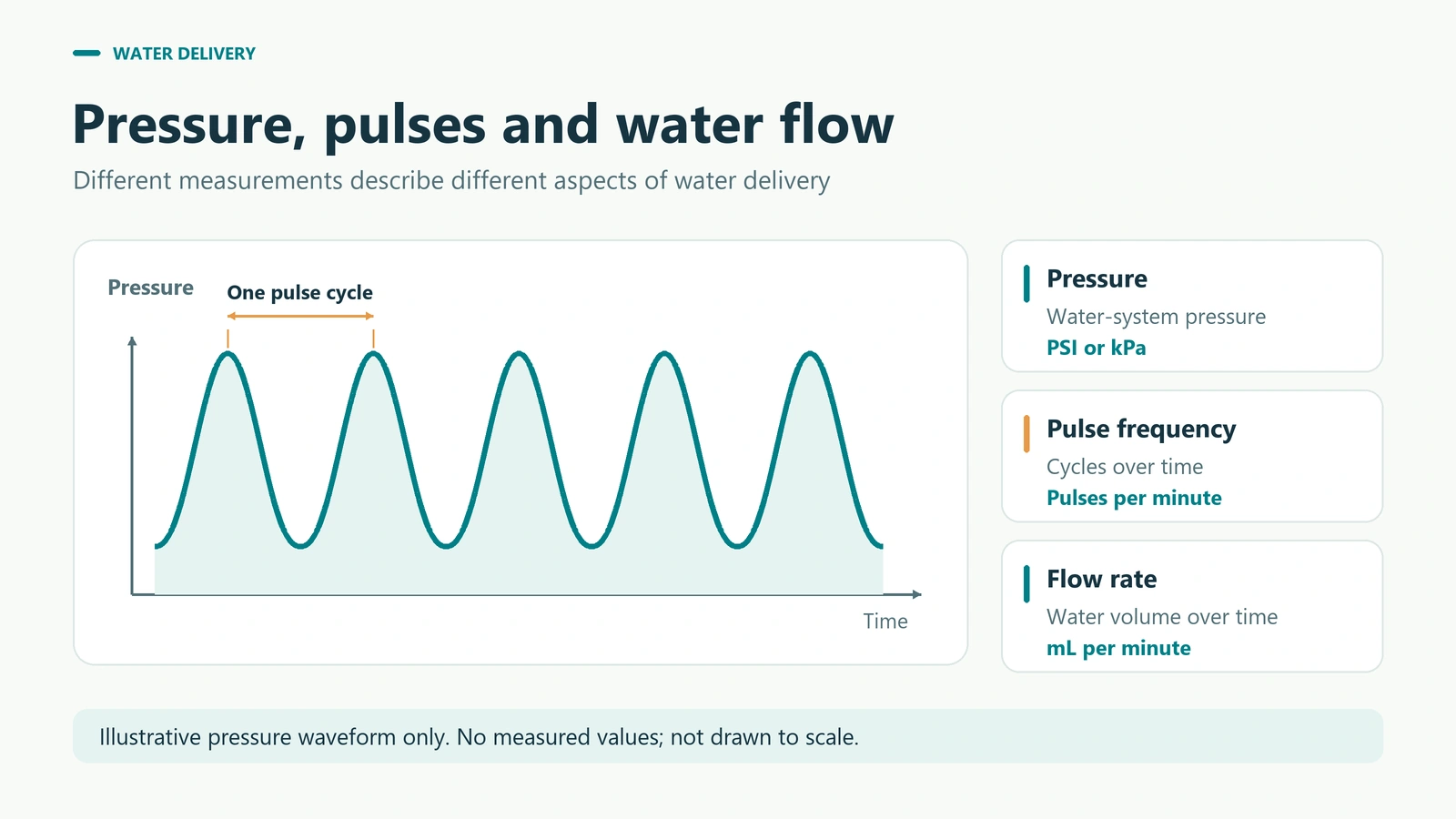
A pulsating water flosser produces repeated pressure peaks rather than an unchanging pressure. In a reciprocating pump design, the pump repeatedly draws in water and pushes it out. That cycle can create rapid pulses even while the motor turns at a fairly constant speed.
Some devices also change the motor’s operation to add a slower rhythm. A mode called Normal can still have rapid pump pulses, while a Massage mode may add longer changes in delivery. The exact mechanism varies by device.
Pressure, Pulses and Water Flow
These specifications answer different questions. Read them together when comparing water flosser pump technology, especially if a product description emphasizes one large number.
| Specification | Typical Unit | What It Tells You |
|---|---|---|
| Water pressure | PSI or kPa | The pressure generated in the water system under the stated measurement conditions. |
| Pulse frequency | Pulses per minute | How often the water-pressure cycle repeats. |
| Water flow rate | mL per minute | The volume of water delivered over time. |
| Reservoir capacity | mL | The amount of water the tank holds. |
A higher pulse count describes a faster rhythm; it does not by itself establish better cleaning. Pressure figures also need context: ask whether the value is a peak or an average, where it was measured, and which tip and mode were used.
For refill planning, compare usable tank volume with average water flow at the chosen setting. At equal flow, a smaller tank runs out sooner. Without flow data, a tank capacity alone cannot give you an accurate operating time.
What Water Flossing Can Clean
The moving water helps carry away food caught between teeth and around areas that are awkward to reach. People with braces, fixed bridges or limited hand mobility may find a water flosser helpful, with advice on technique from their dental professional.
Food debris and dental plaque are different. Plaque is an attached bacterial film, so seeing food wash into the sink is not a measurement of plaque removal. Claims about plaque reduction or gum health need evidence for the device and conditions tested.
The American Dental Association recommends brushing twice a day and cleaning between teeth once a day with floss or another interdental cleaner. Keep brushing as part of your routine, and choose an interdental method with your dentist or hygienist.
Hardened tartar requires professional removal. Increasing the water pressure will not turn a home water flosser into a dental scaling instrument.
Using a Water Flosser
For a standard tip, the usual routine is to fill the tank, choose a low starting pressure and guide the stream along the gumline. Follow your model’s instructions for setup, tip selection and any first-use pump priming.
- Fill the reservoir with the water recommended in the product manual and fit a compatible tip securely.
- Lean over the sink and put the tip in your mouth before starting the water flow.
- Begin at the lowest recommended pressure. Keep your lips partly closed so water can drain without excessive splashing.
- Move along the gumline, pausing briefly between teeth. Work around the inner and outer sides of the teeth.
- Stop the flow before removing the tip. Empty and maintain the device according to its instructions.
After recent dental surgery, get your dental professional’s clearance before directing a water jet at the healing area. For implants or other treatment areas, ask which tip, pressure and technique to use. A hygienist can demonstrate positioning with your own device, as advised by ColumbiaDoctors’ water flosser guidance.
Comparing Water Flosser Designs
For a handheld battery-powered format, explore our cordless water flossers. For example, the BFT C101 specifications list a 40–110 PSI pressure range and a 300 mL tank. Those figures describe pressure and stored water volume; request flow and pulse specifications under the same operating conditions when comparing water delivery.
For a fixed bathroom setup, compare our countertop water flossers by tank access, handle storage and the space they need. Check the power supply separately: a countertop shape does not tell you whether a model is rechargeable or mains powered.
If packed size is the priority, browse our travel water flosser collection and check the dimensions, charging requirements and storage of the complete kit. A travel format can also be cordless, so consider both portability and power supply when shortlisting models.
If you are building a branded product line, make the sample evaluation answer specific questions:
- Can the intended user select a comfortable starting setting and reach the back teeth?
- How much water does each mode deliver with the proposed tip?
- Is the tank straightforward to refill, empty and clean?
- Which replacement tips are confirmed compatible with the selected model?
- Which test reports support the claims planned for the target market?
For a detailed sourcing checklist, read our guide to choosing a reliable water flosser manufacturer before comparing suppliers. Share your target market, preferred format and intended user with BFT so we can discuss the relevant model and customization scope.
FAQ
What Water Flosser Pump Technology Is Used?
One design uses a motor-driven reciprocating piston to draw water into a chamber and push it toward the tip. Other pump arrangements are possible, so confirm the pump type and delivery specifications for the model you are evaluating.
Does Water Flossing Replace String Floss?
The best interdental tool depends on your teeth, spaces and dental work. Ask your dentist whether water flossing should supplement string floss or an interdental brush in your routine, particularly if you have areas that remain difficult to clean.
Does a Water Flosser Need Mouthwash?
Plain water is used in standard water-flossing instructions. Add mouthwash or another solution only when your product manual permits it, and follow the stated dilution and rinsing requirements.
Why Does the Tank Empty Quickly?
The tank empties as water passes through the tip, so session length depends on usable capacity and flow at the selected setting. Compare water delivery in the same mode before treating a short session as a pump fault.
Do More Modes Mean Better Cleaning?
More modes give you more operating choices, but their names do not measure cleaning performance. Compare the actual pressure, pulse pattern and flow, then evaluate whether the controls help the intended user follow the recommended technique.