
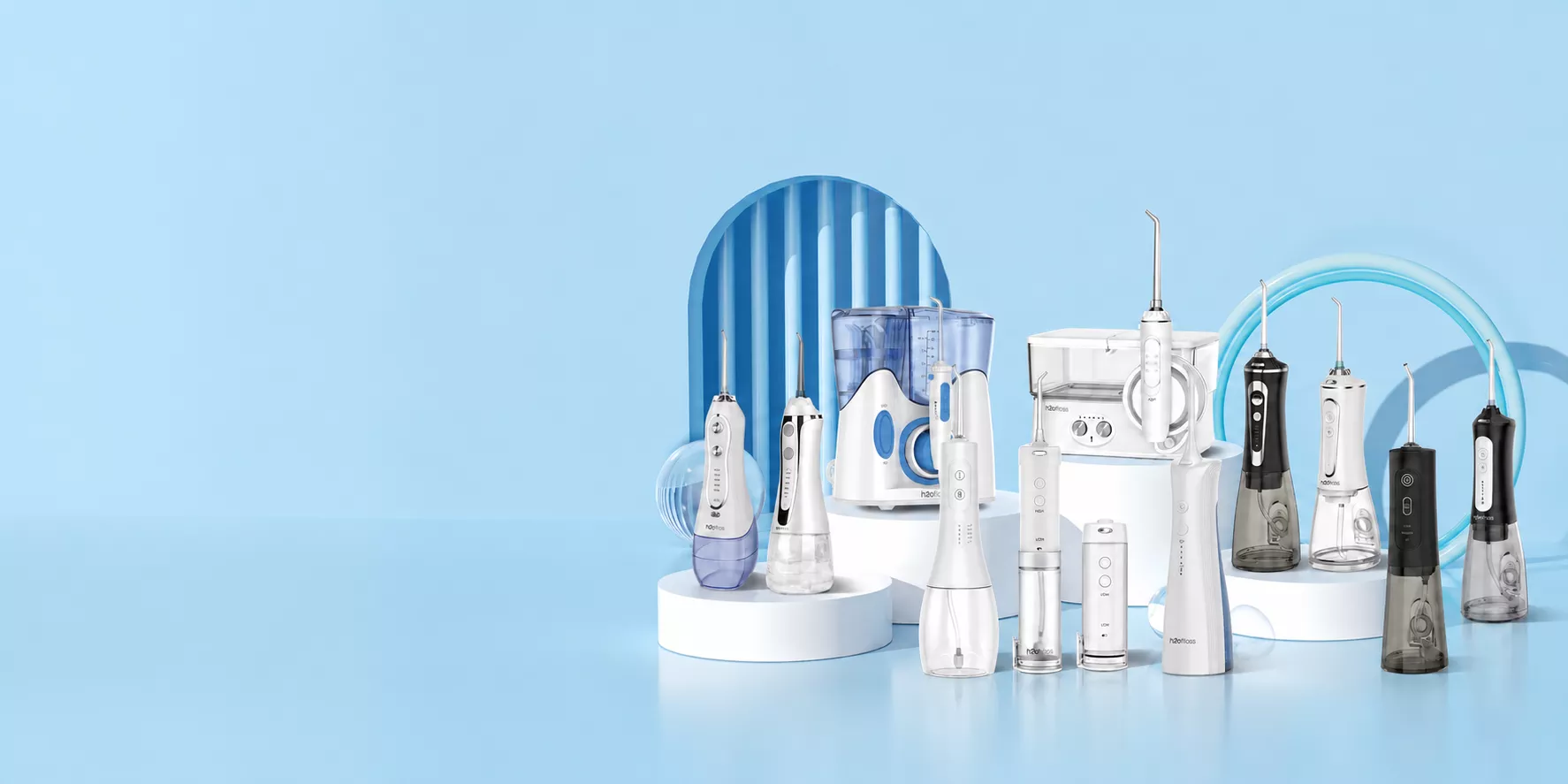
A countertop water flosser can sell for more and still leave less profit per unit. In this cordless vs corded water flosser comparison, cordless refers to rechargeable handheld models, while corded refers to plug-in countertop models.
A larger reservoir may justify a higher price, but a bulkier carton or higher order minimum can reduce the gain. The worked examples connect product selection with refill time, freight per unit, channel margins and launch inventory. Together, those figures help establish which format deserves the first order—and when stocking both makes commercial sense.

Cordless vs Corded Water Flosser Comparison
Cordless handheld models suit a travel-focused range when the complete kit stays compact. Corded countertop models suit a home-use upgrade when they offer fewer refill stops and a comfortable separate handpiece.
| Selection point | Cordless handheld | Corded countertop |
|---|---|---|
| Main customer benefit | Easy packing and storage; use away from an outlet | Longer use between refills; a separate handpiece |
| Everyday tradeoff | Customers hold the filled unit and need to recharge it | The base needs counter space and access to a suitable outlet |
| What to test in samples | Filled weight, grip and packed dimensions of the complete travel kit | Actual running time per fill, handpiece comfort and hose reach |
| What to confirm in the quote | Included charging cable, charger if supplied, and travel case | Input-voltage rating, plug type and regional packaging version |
Which Water Flosser Fits Your Sales Channel?
Cordless handheld water flossers suit a travel-focused range when the complete kit stays compact. For a home-use upgrade, compare time between refills and handpiece comfort. Include a rechargeable countertop model in your shortlist if your customers want that setup without plugging in during use.
Give Cordless a Stronger Story Than “More Modes”
Pressure modes and maximum PSI give customers an easy way to compare similar-looking products on price. A retractable design gives your brand a difference customers can see before opening the specification sheet.
For a travel-focused range, BFT’s HF-10MINI is a practical starting point. Its retractable 200mL reservoir and USB-C charging support a clear selling angle: compact storage and convenient charging while travelling.
Use side-by-side photos to show the HF-10MINI with its tank extended for use and retracted for storage. Customers can immediately see the space-saving design. When reviewing samples, check the packed size with the charging cable and any travel case included in your quote.

Give Countertop a Clear Reason to Cost More
A countertop model earns its place in your home-use range through fewer refill stops, a comfortable separate handpiece and easy controls. Show those benefits on your product page and in demonstration videos, so your customers can understand what the higher price buys them.
A rechargeable countertop model is a useful option when outlet access limits where your customers can place the base. They retain the reservoir-and-handpiece setup but recharge the device between uses.
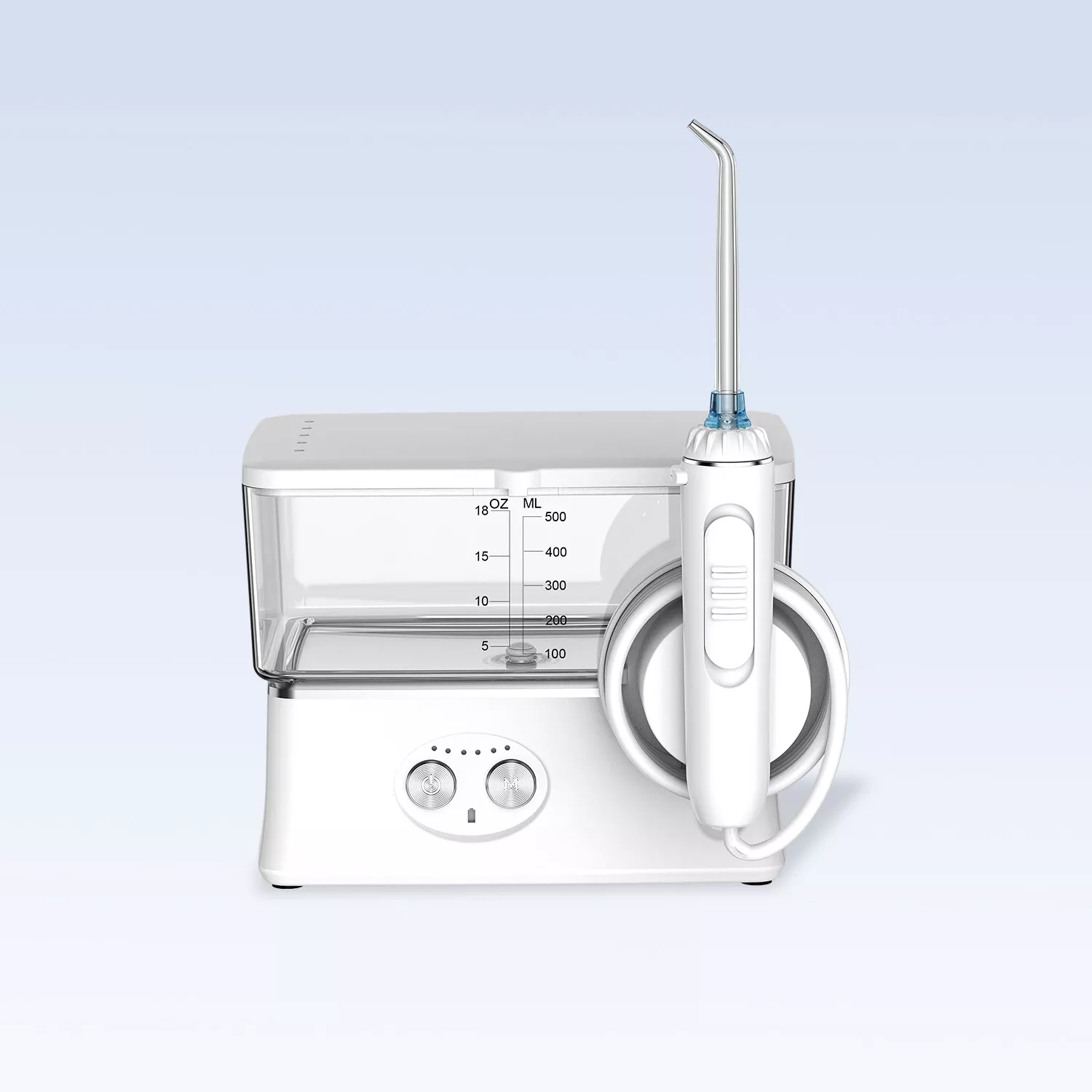
BFT’s HF-3Pro combines a 570mL reservoir, a separate handpiece and USB-C charging. Consider it when you want to offer more tank capacity than a compact handheld model while allowing customers to use the product away from a power outlet.
| Selection point | Plug-in countertop | Rechargeable countertop |
|---|---|---|
| Main reason to choose it | Home use without a charging routine | Flexible placement during use |
| Customer tradeoff | The base needs access to a suitable outlet | The battery needs regular charging |
| Before approving the model | Confirm input voltage, plug configuration and cable reach | Confirm runtime, charging time and the supplied charging kit |
If you’re adding a home-use model to your range, compare plug-in and rechargeable countertop options before choosing one. Check actual running time per fill and handling, then work backward from your intended selling price to the purchase cost and margin you can support.
For a family-focused product, choose a useful tip assortment and make individual tips easy to identify. Extra nozzles should meet your customers’ needs rather than simply increase the number printed on the box.
Let Customer Feedback Decide the Next Product
Use customer feedback to identify what your next model needs to improve. A request for fewer refills points you toward usable tank time. A complaint about outlet access gives you a reason to consider a rechargeable countertop model.
| Customer feedback | Product decision to investigate |
|---|---|
| “I keep stopping to refill it.” | Measure use time per fill at the intended setting before choosing a larger-tank model |
| “It takes up too much room.” | Compare the packed dimensions of compact or retractable handheld models |
| “I want a separate handle, but there’s no convenient outlet.” | Shortlist a rechargeable countertop model |
| “The high setting is uncomfortable.” | Evaluate the lowest usable setting and the steps between settings |
| “I can’t find replacement tips.” | Confirm accessory availability and part identification before expanding your range |
Choose your next SKU around a specific improvement your customers are asking for. You’ll have a clear reason to offer it alongside the models you already sell.
Compare Margin, Freight and Inventory Exposure
Choose the water flosser that leaves a workable contribution through your actual sales route. Factory price is only the starting point. Retail discounts, packaged dimensions and the amount of stock you must buy can change the result enough to reverse an otherwise attractive product choice.
Start With the Price Your Customer Pays You
If you sell to stores, base your product budget on the price they pay you. Their shelf price also needs to cover their margin.
Example: an $80 retail product leaves $15 before overhead
Illustrative wholesale calculation; all figures exclude sales tax or VAT.
| Item | Illustrative amount |
|---|---|
| Retail selling price | $80 |
| Retailer’s gross margin: 40% of retail price | $32 |
| Your selling price to the retailer | $48 |
| Your landed product cost | $28 |
| Your gross profit | $20 |
| Further variable delivery, trade and support costs | $5 |
| Contribution before your overhead | $15 |
The 40% retailer margin is an assumption for this example. If the retailer requires 50%, your revenue falls to $40 and the contribution falls to $7 per unit, with the other assumptions unchanged. Include any agreed advertising, returns or markdown allowances in the cost model.
With a 40% retailer margin, your gross margin is 41.7% of your $48 revenue. The $15 contribution is what remains after the additional variable costs shown. That distinction matters when a supplier presents a high retail price as evidence of an attractive business margin.
For an Amazon offer, use the final retail pack dimensions and weight in Amazon’s Revenue Calculator. Add your advertising and other relevant costs to the estimate. A fee assumption based on the bare device can give you the wrong result for the product you actually ship.
Cost the Carton Before You Approve the Model
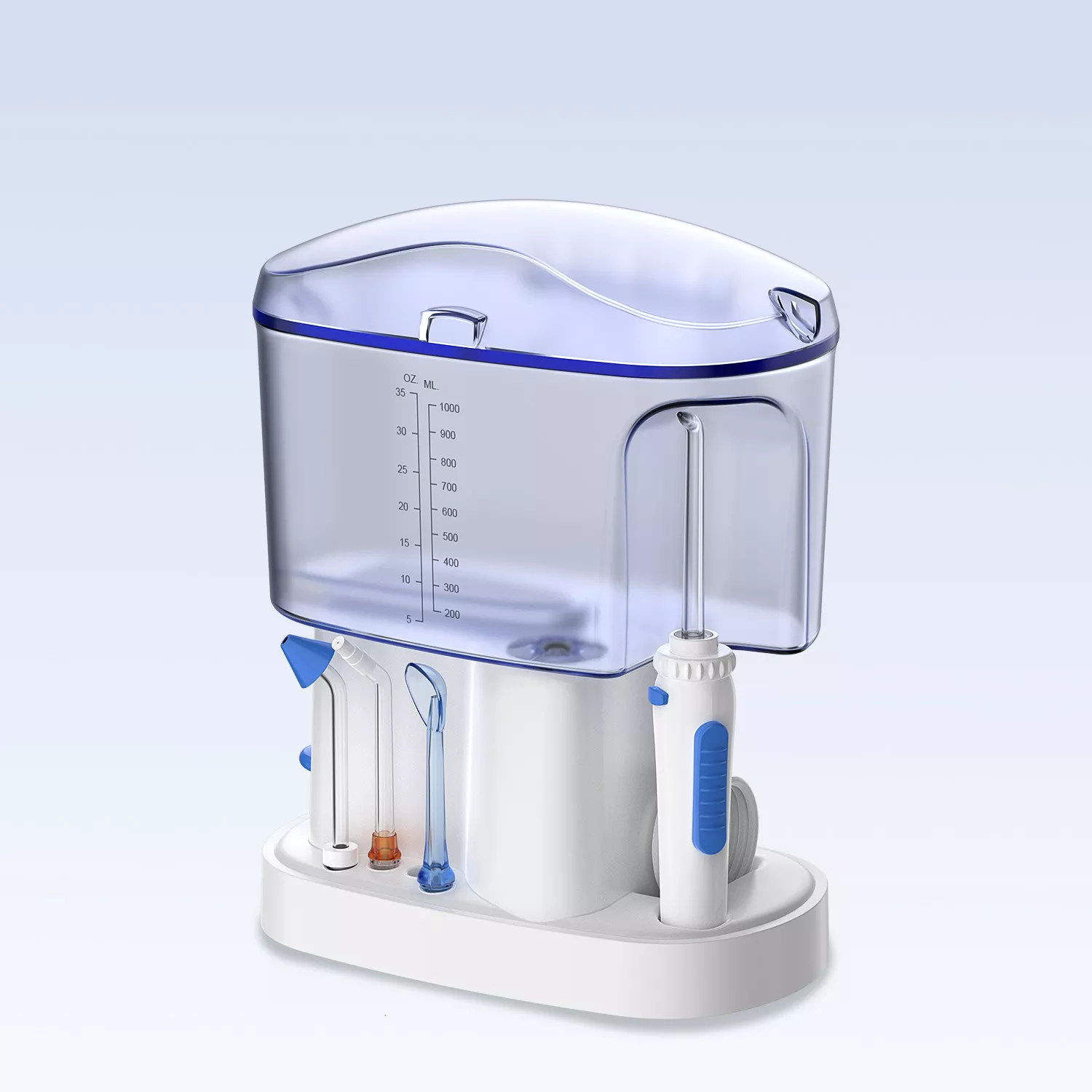
Packing costs depend on the complete model and configuration. Take BFT as an example: HF-10MINI is a cordless handheld model, HF-7 is a corded countertop model, and HF-3Pro is a rechargeable countertop option.
The HF-10MINI lists a retractable 200mL tank and a body weight of 280g. Its published packing configuration is 25 units in a 45 × 42 × 19cm carton.
The HF-3Pro is a rechargeable countertop model with a separate handle. It lists a 570mL tank and a body weight of 530g. Its published packing configuration is 20 units in a 43 × 34 × 39cm carton.
The HF-7 is a plug-in model with a 1,000mL tank and a body weight of 1,330g. Its published packing configuration is three units in a 48.5 × 24 × 22cm carton.
| Published configuration | HF-10MINI | HF-3Pro | HF-7 |
|---|---|---|---|
| Power supply | Rechargeable | Rechargeable | Plug-in |
| Water tank | 200mL | 570mL | 1,000mL |
| Body weight | 280g | 530g | 1,330g |
| Gross weight per master carton | 11.85kg | 16kg | 5.4kg |
| Units per master carton | 25 | 20 | 3 |
| Cartons for 1,000 units | 40 | 50 | 334 |
| Calculated master-carton volume for 1,000 units | 1.44m³ | 2.85m³ | 8.55m³ |
| Illustrative ocean-freight component per unit at $100/m³ | $0.14 | $0.29 | $0.86 |
These calculations use the published carton dimensions before palletization. The HF-7 estimate assumes 333 full cartons and one partially filled carton of the same exterior size; custom packing may change the result.
At an illustrative volume-based ocean-freight rate of $100/m³, HF-7 costs about $0.71 more per unit to ship than HF-10MINI. The HF-3Pro versus HF-10MINI difference is about $0.14 per unit, using the listed packing configurations. Request the final carton dimensions for each shortlisted model before comparing freight quotes.
Body weight is the unboxed device weight. Use actual packed gross weight and carton dimensions for freight quotes. LCL ocean-freight charges can depend on weight or volume, with local charges added separately; $100/m³ here is a calculation assumption, not a current all-in shipping quote.
The extra volume may be worthwhile for a range built around longer home-use sessions. For a compact travel offer, it is a cost to justify. Price the actual shipment and customer benefit together before choosing the larger product.
Keep the First Order Under Control
Get the quantity split priced before approving colors. If a supplier requires 1,000 units per color, three colors commit you to 3,000 units. Adding a second model creates another order commitment, even when the branding looks coordinated.
At the $28 landed-cost assumption used above, 1,000 units represent $28,000 of inventory, while 3,000 units represent $84,000. The additional colors add $56,000 of stock before sales show which colors customers prefer.
For an unproven launch, one well-chosen configuration can leave more money available for selling, replenishment and replacement stock. Add variants when customer demand gives them a role.
Test the Claims Behind the Price
Water flosser samples should prove the benefits you intend to sell. A travel product needs to demonstrate practical portability. A higher-priced home-use product needs to deliver the refill interval, handling and controls behind its positioning. Test those claims before spending time on cosmetic differences that will not rescue a poor product fit.
| Planned selling claim | Evidence the sample should provide | What a poor result means |
|---|---|---|
| “Ready for travel” | The complete kit packs conveniently, drains properly and has a practical charging arrangement | Reconsider the kit or the travel positioning |
| “Fewer refills” | Measured use time at the mode and nozzle customers will use | Review the reservoir, flow setting or claim |
| “Comfortable control” | Usable low settings and controls that remain easy to operate with wet hands | Reconsider the platform before adding a premium finish |
| “Convenient family use” | Clearly identifiable tips, accessible storage and an easy cleaning routine | Revise the accessory package or product choice |
Measure Seconds of Use, Not Just Milliliters
A larger water tank does not automatically provide proportionally longer use. Flow rate changes how quickly the water is consumed.
Example: a 600mL tank lasts 15 seconds longer at a higher flow rate
These hypothetical models have different flow rates: 400mL/min and 600mL/min. Assume the stated tank volume is usable and each model maintains its stated flow:
- 300mL at 400mL/min gives 45 seconds of flow.
- 600mL at 600mL/min gives 60 seconds of flow.
The 600mL model also uses water 50% faster, so doubling the tank volume adds only 15 seconds in this example. For a “fewer refills” offer, compare the measured running time at the intended setting and nozzle.
Test Convenience With the Product Ready to Use
An empty cordless handheld sample can feel comfortable and still become awkward when filled. Put water in the tank, use the controls and rotate the nozzle before approving the grip. For a countertop product, evaluate the separate handle and the complete setup the customer will use.
Battery claims need the same attention. Ask how many minutes of operation support a “30-day” claim and which mode was used. Agree the supplied charging kit and instructions before packaging approval, so the customer receives the arrangement you evaluated.
Finally, decide how you will handle a confirmed fault. If the factory provides replacements with the next order, plan local replacement stock around your customer-service promise.
Choose Your First SKU Before Expanding
If you have not confirmed demand for both formats, start with one clear offer and a focused color range. If you already receive orders or repeated requests for a second format, use that demand to guide the addition. Expand when the second product serves a distinct customer and its order leaves enough cash for selling and support.
| Your commercial position | Recommended direction | Reason to proceed |
|---|---|---|
| Your offer centers on portability, storage or travel | Lead with cordless | The complete product demonstrates that convenience at a workable delivered cost |
| Your customers want an upgrade for home use | Evaluate a corded countertop model | The sample delivers the requested upgrade and the sell-in price leaves sufficient contribution |
| Your existing cordless range receives repeated requests for longer use between refills | Consider a larger-tank countertop model | The measured improvement is worth the added size and order cost |
| You have demand for both travel and home-use products | Consider two clearly differentiated models | Each has its own buyer, selling proposition and funded order |
| Both products need the same headline to explain why customers should buy them | Refine the range before ordering both | The second SKU still needs a distinct reason to exist |
For customers who want a larger tank and a lighter handpiece without plugging in during use, prioritize a rechargeable countertop model. BFT’s HF-3Pro is one option to evaluate. Compare its use time per fill and charging routine with the corded option before approving it.
Give the second SKU its own business case. A coordinated appearance can help present a range, but the purchasing decision still needs a customer reason, viable costs and a practical service plan.
FAQ
Are cordless water flossers quieter?
Not necessarily; noise depends on the model and operating setting. Compare samples and request readings at the same distance and pressure setting before paying extra for quiet operation or using a noise claim to distinguish your entry-level and premium products.
Can both formats share replacement tips?
Yes, if the supplier confirms that the same replacement tips fit both models. Sharing a tip pack can simplify accessory stocking and reorders, so confirm the part numbers and ongoing supply before promising customers that one pack works across the range.
Can one model serve several markets?
One product platform may serve several markets, with different power or packaging configurations. Confirm the corded model’s input-voltage rating and plug, or the cordless model’s charging requirements, then ask whether separate regional packs carry their own minimum quantities before splitting an order across countries.
Does cordless mean shower-safe?
No, battery power alone does not make a water flosser suitable for shower use. Check the model’s instructions and water-resistance reports before advertising shower use, and include any use or charging restrictions in your product listing and manual.
Build Your Water Flosser Range With BFT
BFT supports brands and distributors with water flosser selection, customization and new product development. Its in-house design, tooling, injection molding, assembly and quality control allow the product brief and production requirements to be discussed with one manufacturing partner.
BFT’s OEM and ODM services cover logo, color, packaging and manual customization as well as product development. The useful starting point is a commercial brief: your target countries, sales channel, intended selling price and first-order quantity.
Send those details with the customer benefit you want to lead with. Ask for two suitable model options, their exact pack contents and carton data, and a sample plan. Compare what each offer can deliver before committing to the range.