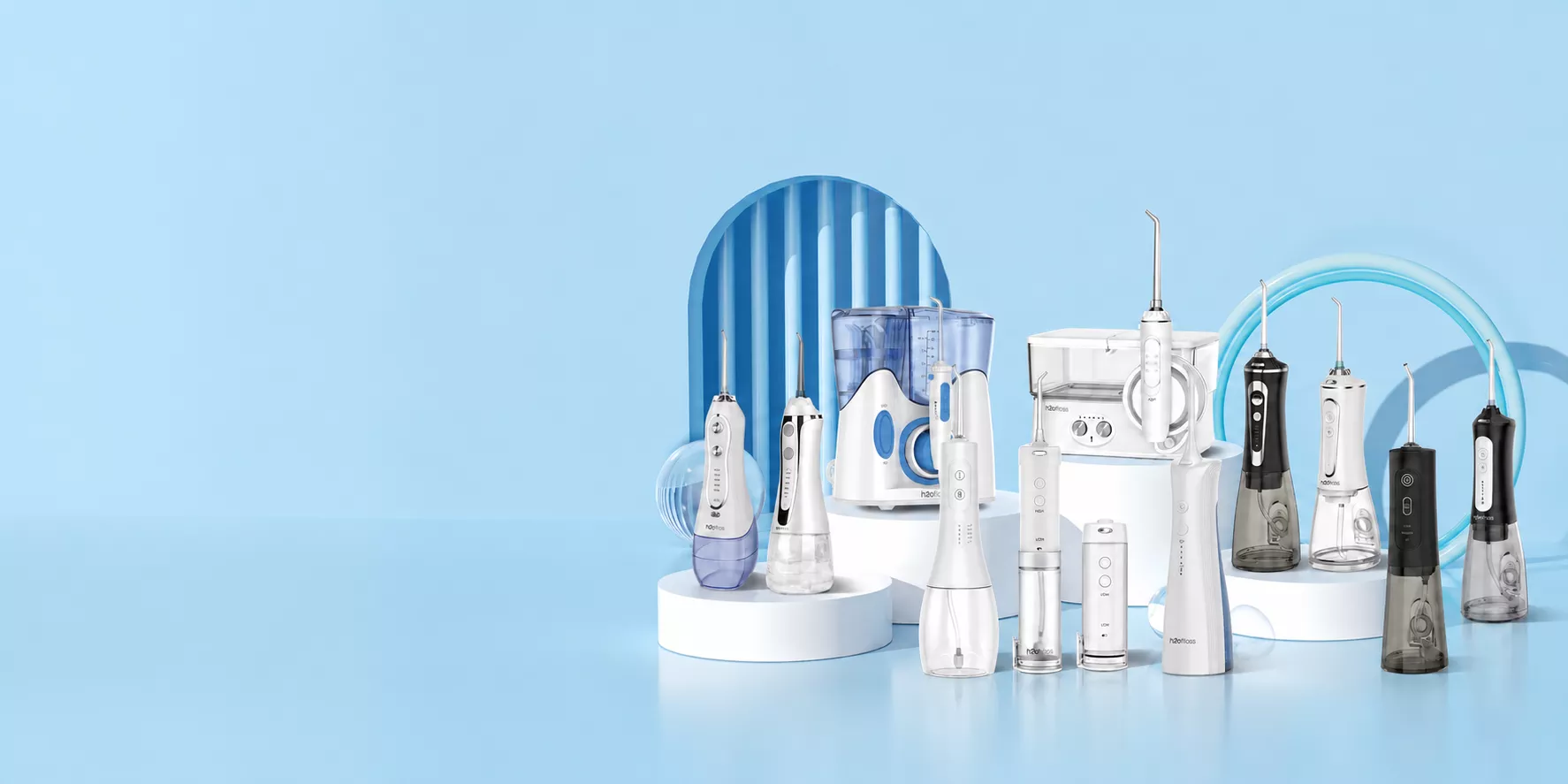
Water flosser nozzle types include standard jets, orthodontic brush tips and soft periodontal tips, each designed for a different cleaning task. Choose the intended function first, then confirm that the exact tip is approved for your water flosser model.
For oral-care brands and distributors, the number of tips in a box is only the beginning. A useful kit needs clearly identified attachments, matching instructions and replacement parts customers can order for the device they own.
7 Water Flosser Nozzle Types
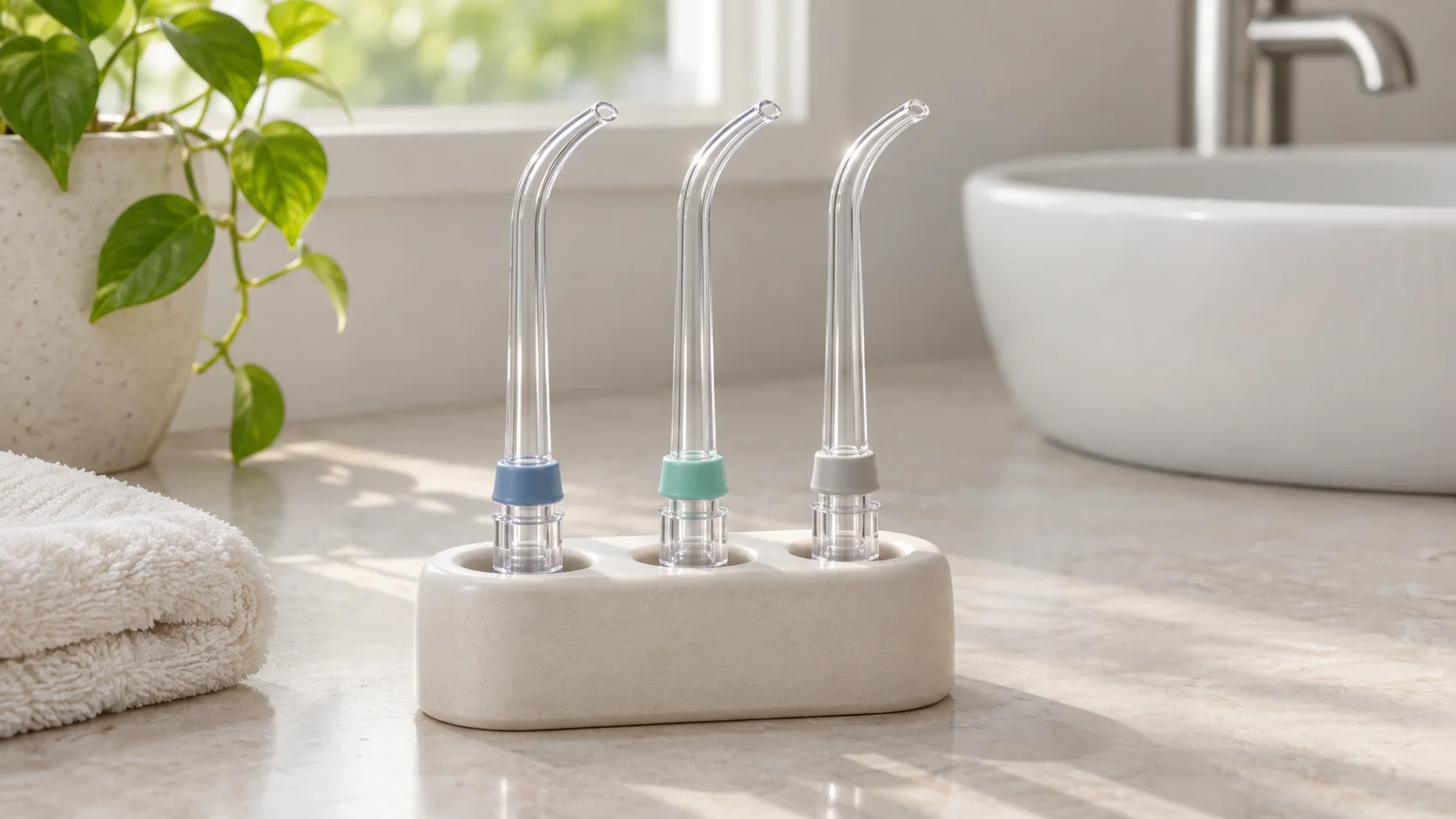
Seven attachment designs you may encounter are standard jets, orthodontic tips, brush-ended restoration tips, soft periodontal tips, tongue cleaners, toothbrush attachments and implant-denture tips. Their purposes differ, and their connectors are not universal. Match the cleaning task to the attachment, then check the device and nozzle instructions together.
Manufacturers may use “tip,” “nozzle” or “head” for an attachment. Names and included designs vary by product, so check the exact device’s accessory list.
1. Standard Jet Tips
A standard jet tip directs a focused stream through a small outlet. It is the usual starting option for routine cleaning between teeth and along the gumline, with positioning and pressure set according to the device instructions.
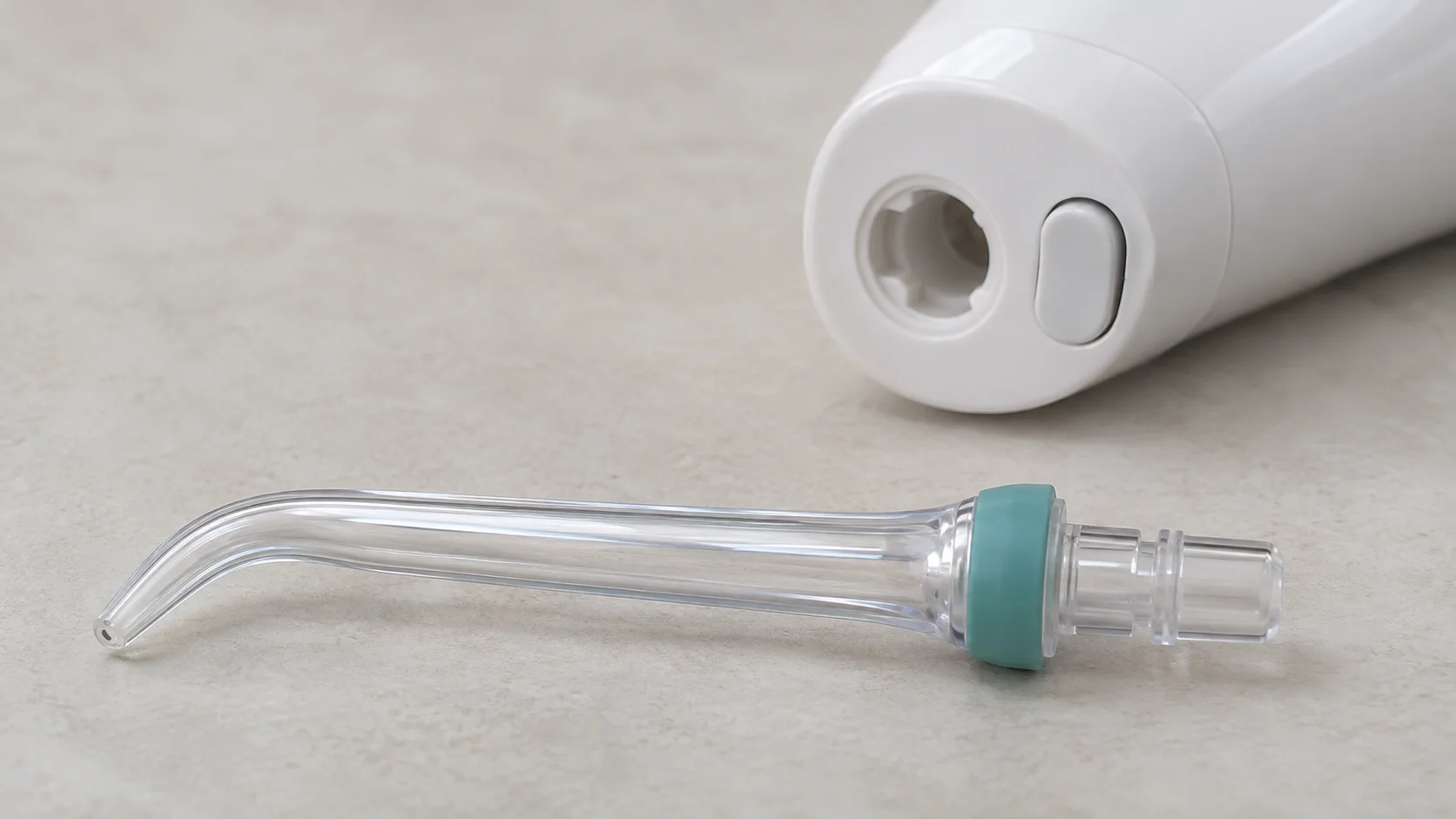
When comparing water flosser nozzle types, keep the cleaning end and the connection end separate. Similar-looking clear tubes can still belong to different device families.
2. Orthodontic Tips
An orthodontic tip typically adds a small tapered brush around the outlet. This design combines water delivery with light brushing around brackets and other orthodontic hardware; Waterpik’s Orthodontic tip is one manufacturer-specific example.
The tip still needs access to the area being cleaned. If you want to explore device shape and handling around brackets, read our guide to choosing a water flosser for braces alongside the attachment instructions.
3. Brush-Ended Restoration Tips
These tips use small bristle tufts to help reach around dental restorations. For example, Waterpik’s Plaque Seeker design has three fine tufts and is intended for areas around implants, crowns and bridges.
This is a different design from a tapered orthodontic brush. For implant care, ask the dental team which attachment and contact technique suit the restoration rather than treating an “implant” label as sufficient guidance.
4. Soft Periodontal Tips
A soft periodontal tip is designed for targeted delivery into periodontal pockets under professional guidance. It should not be treated as an ordinary jet tip that can simply be pushed farther under the gums.
Some comfort and multi-stream nozzles also use soft rubber. Identify the intended function from the instructions, rather than from softness alone.
Pressure restrictions matter. Waterpik’s instructions for its Pik Pocket tip specify the lowest setting; that requirement belongs to that attachment and does not establish a pressure rule for every soft-looking nozzle.
5. Tongue-Cleaning Tips
A tongue-cleaning attachment has a broad, spoon-like working end. Its shape is intended for the tongue surface, rather than the narrow spaces between teeth.
Confirm its operating instructions before use. It adds another cleaning task to a kit, but does not replace the standard jet attachment’s role.
6. Toothbrush-Style Attachments
A toothbrush-style water flosser attachment carries water through a brush head. Some designs require manual brushing movements: Waterpik’s TB-100E, for example, is stationary rather than an electric or sonic toothbrush head.
Check how the brush operates and which handle accepts it. Do not assume that a water-flossing brush attachment and an electric toothbrush replacement head are interchangeable.
7. Implant-Denture Tips
An implant-denture tip is a separate design for reaching underneath and around fixed implant-supported bridges or dentures. Waterpik lists this attachment separately from its brush-ended restoration tip.
A fixed full-arch restoration creates different access needs from a single crown. Ask the treating dental team to identify the cleaning route and suitable attachment before selecting a tip by its name alone.
Check Water Flosser Nozzle Compatibility
Water flosser nozzle compatibility requires more than a similar connector or a matching brand name. Philips’ current support guidance separates Sonicare Power Flosser, AirFloss and 1000 Compact Flosser nozzles into their respective device families. That example shows why the exact product family matters even within one brand.
Before buying a replacement, check these details:
- The device identity: use the model number from the device label, including any version the supplier requires.
- The nozzle identity: match its part code to a current manufacturer compatibility list or written confirmation for that device.
- The operating instructions: confirm the allowed pressure settings, insertion method and cleaning task for the selected attachment.
A tip that seems to slide into a socket has not thereby been confirmed compatible. Follow the manufacturer’s fitting and release procedure; do not force an attachment or modify the connector to make it fit.
If you want to understand how a nozzle interacts with pressure and water flow, read our explanation of how a water flosser works before comparing accessories by their shape alone.
Replacement and Care
Replacement intervals belong to the exact attachment. Waterpik’s current guide gives three months for its Orthodontic tip and six months for its standard jet and Tongue Cleaner; these examples are not a universal replacement schedule for BFT or other products.
Use the selected manufacturer’s cleaning and storage directions, and inspect the nozzle for damage or wear. For a brush-ended tip, look at the bristles as well as the water outlet. If the attachment is damaged, stop using it and obtain the correct replacement rather than trying to reshape or repair the working end.
When planning replacement stock, browse BFT’s replacement tips and accessories, then confirm the exact nozzle part and compatible device configuration with your sample request.
Plan a B2B Tip Set
For a brand or distribution range, compare water flosser nozzle types by intended use and replacement support. Several copies of the same standard jet may serve different users, while a smaller set may contain more distinct functions; tip quantity and tip variety are separate purchasing questions.
Use this sheet when reviewing a proposed kit and its replenishment plan:
| Check | What to confirm |
|---|---|
| Kit contents | Each attachment’s function and quantity, with a part identifier. Separate repeated jet tips from additional nozzle types. |
| Compatibility record | The exact device model/version and approved nozzle code. Keep that pairing in the product listing and instructions. |
| Sample review | Fitting, retention, release and leakage checks performed according to the supplier’s instructions on the selected configuration. |
| Customer guidance | Clear attachment names, intended tasks, pressure restrictions and any need for professional instruction. |
| Replenishment | Replacement ordering codes, pack quantities, the applicable replacement advice and the supply terms to confirm for your market. |
For a private-label kit, BFT’s OEM and ODM services provide a route to discuss packaging and manual requirements. Confirm the proposed attachment set and model-specific instructions for the project before approving artwork that describes what is included.
FAQ
Are water flosser nozzles universal?
No universal fit should be assumed across brands or product families. Match the exact nozzle part to the device model using the manufacturer’s current compatibility information, even when two attachments look alike.
Do different colors indicate different tip types?
Not necessarily: colored rings can distinguish users’ copies of the same tip, as in Waterpik’s system. Use the attachment name and part identifier to determine its function; matching colors do not confirm compatibility.
Does every kit include all seven types?
No: these are attachment designs you may encounter, and included parts vary by device and package. Check the itemized pack contents rather than assuming that every tip shown in a guide or promotional image is supplied.
When should a nozzle be replaced?
Follow the interval and wear guidance for the exact attachment, and replace a damaged tip rather than continuing to use it. Keep its part code and compatible device model so you can reorder the correct replacement.
For your next BFT kit brief, name the intended users and cleaning tasks, then ask for the proposed nozzle list, model compatibility details and replacement identifiers with the sample. Review those details together before finalizing the retail pack and its accessory listings.