
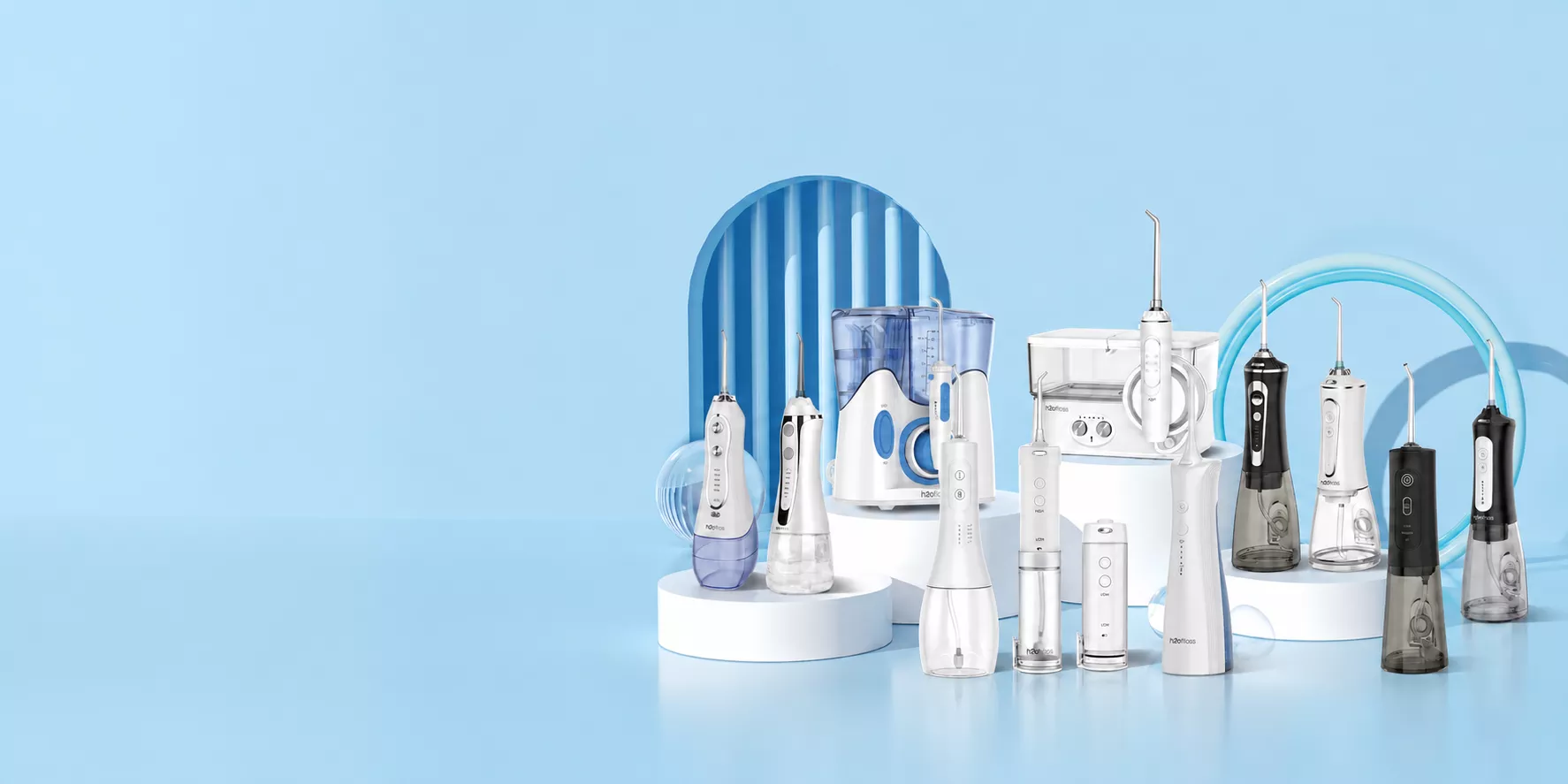
A water flosser uses a directed stream of water to clean between teeth and around the gumline, while string floss cleans tooth surfaces through direct contact. In the water flosser vs floss comparison, the useful question is which tool suits a person’s mouth, hand control and daily routine.
For oral-care brands, importers and distributors, that distinction matters when selecting products and answering customer questions. A useful comparison explains what each method can do, where the evidence has limits and what customers need to use either tool well.
Water Flosser vs Floss Compared
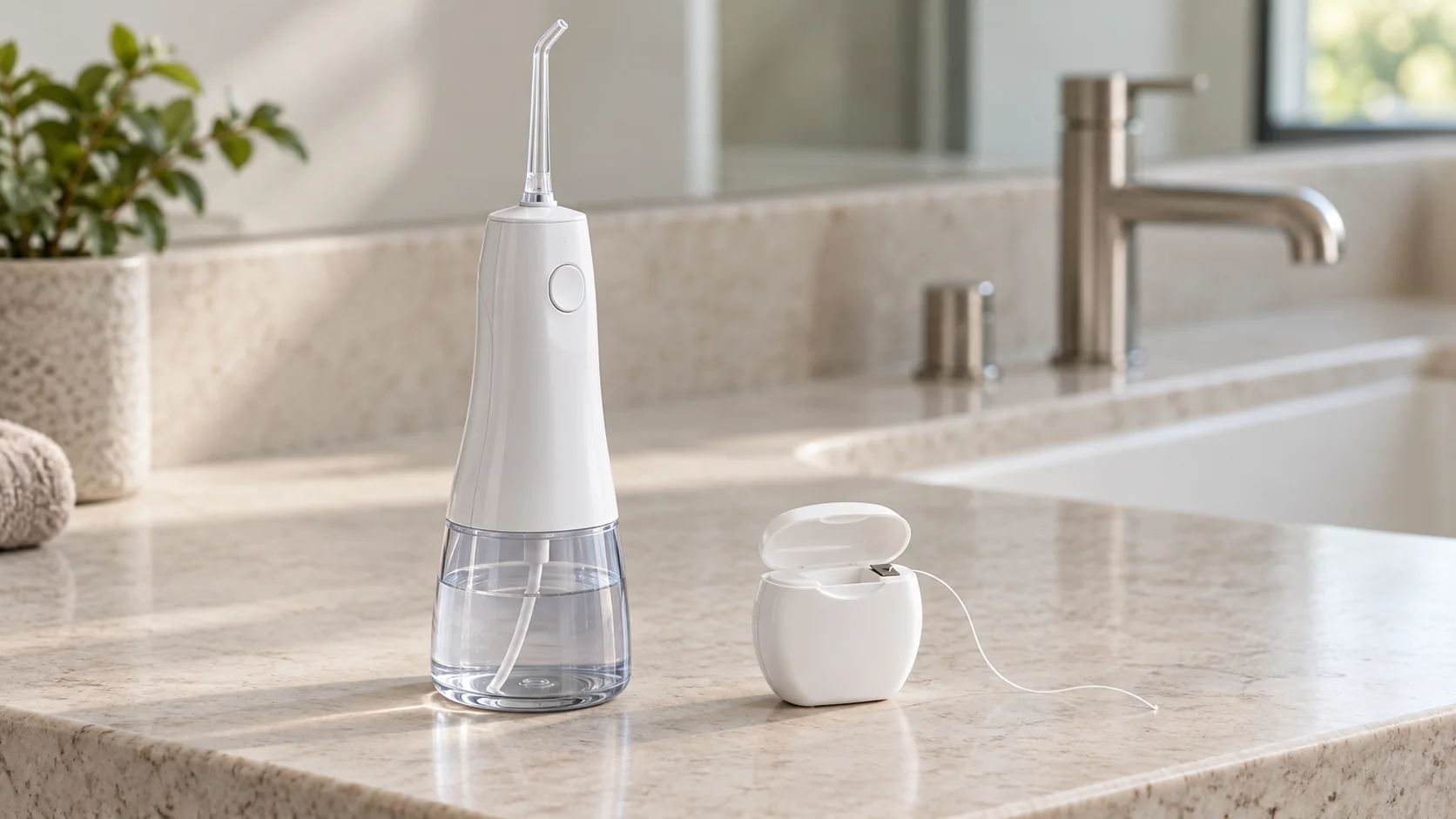
String floss wraps against the sides of teeth to remove plaque and trapped food. A water flosser directs water between teeth and along the gumline. Floss needs controlled finger movements; a water flosser needs careful nozzle positioning. Neither method replaces brushing, and neither is automatically the best choice for every user.
| Practical question | String floss | Water flosser |
|---|---|---|
| How does it clean? | A strand slides against each tooth surface. | A directed water stream cleans between and around teeth. |
| What skill does it require? | Guiding the strand gently and curving it around each tooth. | Aiming the nozzle and following a consistent route. |
| What about braces or bridges? | Threading may require an extra tool and more handling. | May be an option when dental work makes manual flossing difficult. |
| What does the routine involve? | A fresh section of floss as cleaning progresses; discard after use. | Filling the reservoir, using the device and maintaining it according to its instructions. |
| What must buyers budget for? | Floss replenishment. | The device, replacement tips and any charging or power requirements. |
| What travels more simply? | A small dispenser needs no water tank or power. | Check the actual device size, charging needs and drying arrangements. |
The American Dental Association identifies water flossers as an option for people who struggle with manual flossing, including those with braces or fixed bridges. Its water-flossing guidance also makes an important distinction: safety and effectiveness statements about ADA-accepted devices apply to products that have earned that acceptance.
What the Evidence Supports
Food debris, dental plaque and gum inflammation are different things. Seeing food wash into the sink does not measure how much plaque has been removed, and a change in gum inflammation does not establish the same change in plaque.
A 2019 Cochrane review of interdental cleaning found some evidence that oral irrigation may reduce gingivitis more than flossing in the short term. It did not establish a corresponding advantage for plaque, and the evidence was low to very low certainty. These findings do not justify a promise that every water flosser is better than every flossing routine.
For a water flosser vs floss comparison, match each claim to its evidence. Before putting a comparative percentage on packaging or a product page, check the tested device, comparison group, outcome and study duration. A result for one model or one clinical measure cannot simply be transferred to a private-label product.
Keep the basic routine clear in customer education: clean between teeth daily and continue brushing twice a day. The ADA’s interdental-cleaning overview supports choosing a method around the individual’s needs rather than declaring one universal winner.
Choose for the User’s Routine
For someone who handles floss comfortably: string floss remains a reasonable choice, particularly for tight interdental spaces. The relevant question is whether the user can clean against each tooth, rather than simply pass the strand through the gap.
For someone who struggles with threading: a water flosser is worth discussing with a dental professional. Braces and fixed bridges can complicate manual flossing, but their presence does not establish that one device will clean every required surface. Follow the dental team’s advice about any additional aids.
For someone with limited hand control: evaluate the task, not just the product category. Can the user hold the device, reach the controls and refill it? A floss holder may also be worth considering; switching to powered equipment is not the only option.
For someone with larger interdental spaces: the choice may extend beyond water flossing and string floss. A dental professional may recommend a correctly sized interdental brush. Avoid presenting this comparison as the full range of care options.
For a product assortment, compare the physical formats in BFT’s water flosser range against your intended users’ routines. A travel-focused brief and a home-use brief may prioritize different handling and storage needs; neither brief proves better clinical performance.
Water Flosser vs Floss Technique
A poorly used tool is a weak basis for comparison. If a customer finds flossing difficult, first identify whether the problem is reaching the area, controlling the strand or understanding the technique.
With string floss, guide the strand gently through the contact and curve it around one tooth in a C shape. Move it against that tooth’s side, then clean the adjacent tooth before moving on. Avoid snapping it into the gums. The National Institute of Dental and Craniofacial Research’s oral-hygiene guidance explains this approach and lists alternatives when holding floss is difficult.
With a water flosser, place the nozzle in your mouth before switching on, then follow the positioning and cleaning route in the instructions for that device and tip. Learn to control the flow before judging the experience. Do not select a pressure setting on the assumption that a stronger sensation means better cleaning.
Customer instructions should answer practical questions before first use: how to fill and empty the tank, which setting to start with, how to attach the tip and how to clean and dry the equipment. A label such as “soft mode” is less useful without directions that explain what to do.
What B2B Buyers Should Evaluate
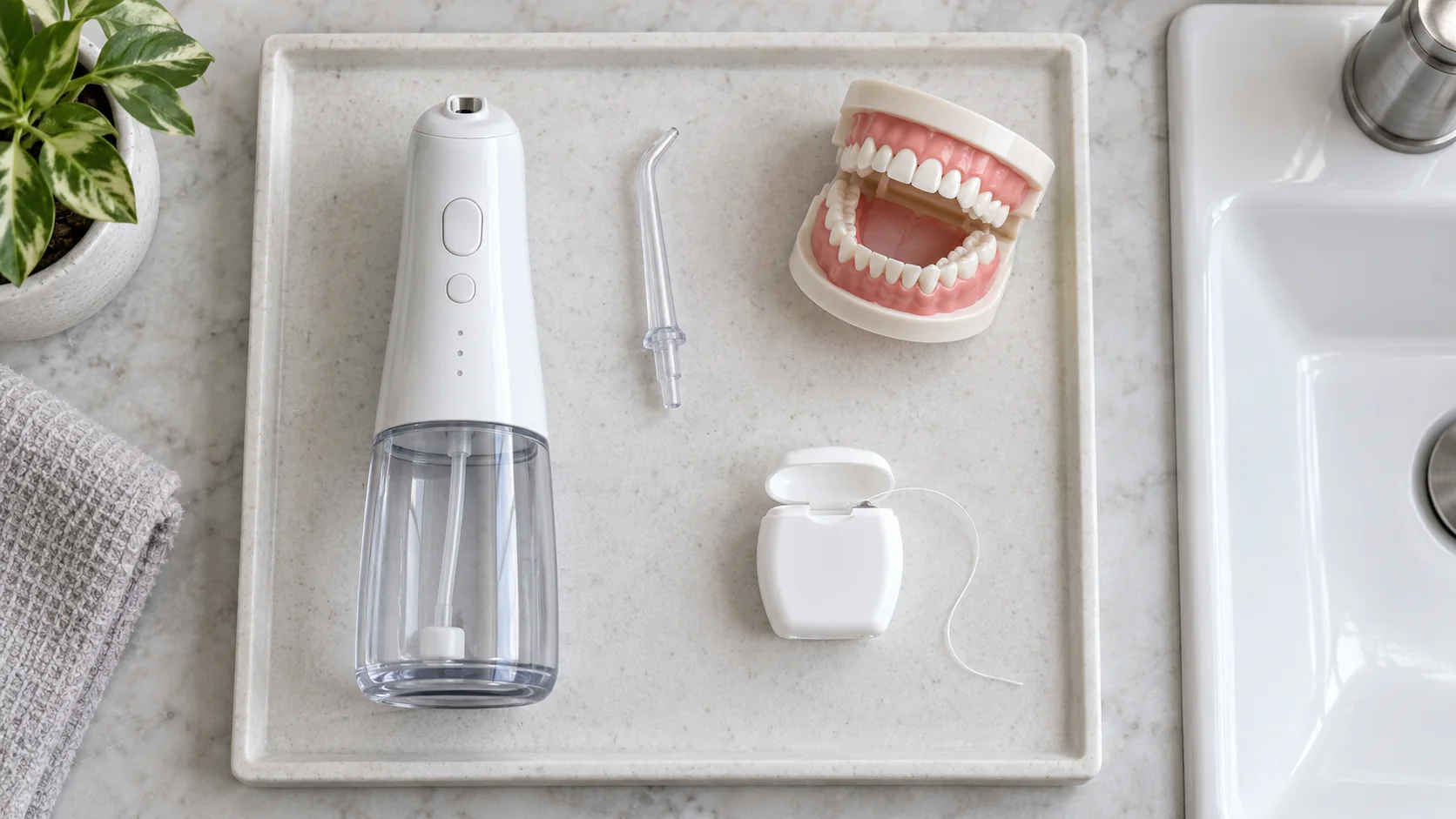
If you are adding water flossers to an oral-care line, translate the comparison into a sample brief. The following checks assess usability and support needs; they do not measure clinical effectiveness.
| Sample check | What to record | Decision it informs |
|---|---|---|
| Controls and handling | Whether users can distinguish the power and mode controls while holding the device. | Suitability for the intended audience and clarity of instructions. |
| Refilling and storage | Tank access, emptying, drying and storage steps. | Fit with a home or travel routine. |
| Usable run time per fill | Time to empty at a stated setting, using the same method for each sample. | Refill expectations; capacity alone does not answer this. |
| Replacement tips | Confirmed compatibility, ordering information and model identification. | Whether customers can obtain the correct consumables. |
| Evidence and documentation | Support for each proposed claim and documents applicable to the model and destination market. | What can accurately appear in packaging and sales materials. |
If your product brief prioritizes travel, use BFT’s travel water flosser collection to shortlist formats, then check packed dimensions, charging requirements and drying steps in the selected model’s documentation.
BFT’s OEM and ODM services include branding, packaging, colors and instruction manuals, with project scope confirmed individually. Use those materials to explain the product’s intended routine and care requirements; avoid treating customization or electrical compliance documents as proof of superior plaque removal.
FAQ
Is Water Flossing as Good as Flossing?
It can be an appropriate interdental-cleaning option, especially when manual flossing is difficult, but “as good” depends on the outcome and the user’s needs. Evidence does not establish that every water flosser is equivalent or superior to string floss for all purposes.
Can a Water Flosser Remove Tartar?
Neither water flossing nor string floss removes hardened tartar. Tartar needs professional cleaning; home interdental cleaning addresses plaque and debris before buildup hardens.
Should You Floss Before or After Brushing?
The ADA considers either order acceptable if cleaning is thorough. Choose a sequence you can maintain, follow the device instructions and keep brushing as part of the routine.
Does Everyone Need Both Tools?
No single combination suits everyone. Ask a dentist or dental hygienist which surfaces need attention and which aids can reach them, rather than assuming that buying both tools automatically provides complete cleaning.
Planning an oral-care product line? Bring BFT a brief that names your target users, sales market and the handling needs you want to evaluate. Ask for model-specific samples and supporting documents, then build customer instructions around the configuration you select.