Choose electric toothbrush manufacturers by the toothbrush platform they can document, the samples you can approve, and the replacement heads you can reorder. For a private-label launch, compare the exact handle, head, battery and retail pack that each factory will put into production.
A useful quotation connects those parts to a version, an approval record and a responsible person. That gives your product team a way to judge an electric toothbrush supplier beyond the appearance of a sample or the number of modes on a specification sheet.
Compare Electric Toothbrush Manufacturers
Compare an electric toothbrush factory against the same written product brief. Ask for a matched set of component specifications, production-reference samples, test records and reorder terms. Approve the configuration as a whole, then require the supplier to identify changes before substituting a brush head, battery, charging arrangement or firmware version.
| Decision Area | Evidence to Request | Record Before Approval |
|---|---|---|
| Drive platform | Operating mechanism, mode definitions and test conditions | Handle and firmware version |
| Brush head | Attachment drawing, filament specification and inspection criteria | Head part number and approved sample |
| Battery and charging | Cell identity, runtime method and transport test information | Battery and charger configuration |
| Sample approval | Differences between the sample and planned production | Signed configuration and open issues |
| Toothbrush quality control | Relevant inspection records and acceptance criteria | Inspection plan and batch traceability |
| Market documentation | Documents mapped to the model and destination | Compliance review owner |
| Replacement heads | Compatibility list and repeat-order quotation | Reorder SKU and change-notice terms |
| Order responsibility | Itemized quote and named parties | Approval, tooling and claim responsibilities |
Electric Toothbrush Platforms and Heads
1. Which Platform Fits Your Brief?
Ask electric toothbrush manufacturers to identify the platform behind the quoted model: its drive mechanism, control electronics, available modes and charging arrangement. Request a separate response for features already available and features that need engineering work. A new button sequence, pressure response or handle shape should have a defined development scope.
For any claimed motion or vibration figure, ask what is measured, which unit is used, and under what operating conditions. Compare the mode behavior and feel on a working sample. A headline frequency gives you little basis for approving the controls, noise or loaded operation you actually want.
When choosing a starting platform, use our sonic electric toothbrush range to prepare a model-specific sample request. Keep your required functions separate from optional features so that an electric toothbrush manufacturer can quote the same priorities you will evaluate.
2. Which Heads Fit Each Handle?
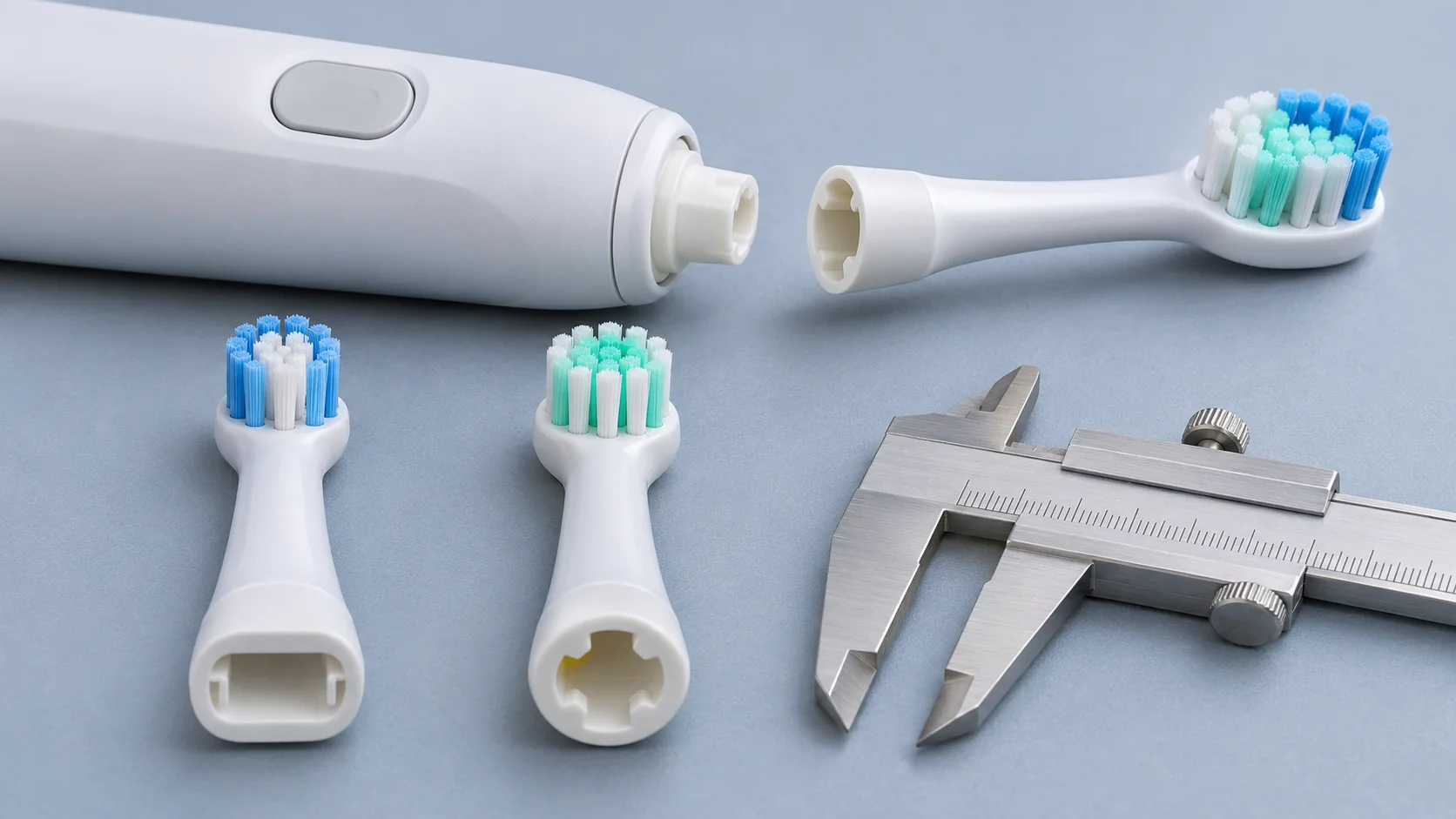
Request the brush-head part number and attachment specification for each handle. Check installation, removal, retention and movement with the actual head-and-handle combination. Similar-looking heads should not be treated as interchangeable without that check.
Specify the filament material, bristle dimensions or grade where relevant, trim profile and finish you are buying. Ask which inspections control those features and what constitutes an unacceptable head. If you are comparing different head designs, approve them separately rather than relying on one generic description such as “soft bristles.”
Battery Performance and Sample Approval
3. How Are Battery Claims Tested?
Ask for the battery identity and capacity, charging input, supplied cable or charger, and the method used to calculate runtime. A comparison needs the operating mode, session length, sessions per day and the endpoint used in testing. Agree which configuration will support any battery-life statement on your packaging.
For a lithium-powered product, request the matching UN 38.3 test summary and check the cell, battery or product model against the quoted configuration. PHMSA’s test-summary guidance identifies the model, test-report number and report date among the information used to trace that evidence. Have your logistics provider confirm the shipment requirements for the route and packing arrangement.
Put battery substitutions on the change-control list. A revised cell, protection circuit or charging arrangement should trigger a review of the affected performance claims and documentation before the supplier uses it in your order.
4. What Does Sample Approval Freeze?
Ask what the sample represents: a stock demonstration unit, a branded sample or the configuration intended for production. Request a written list of remaining differences. A sample with your logo may still use a different head, firmware or battery from the proposed bulk order.
Keep a dated production-reference sample together with its configuration record. Include the handle model, head part number, electronics and firmware version, battery, charging accessories, retail-pack contents and artwork revision. Both sides should identify which open items must be closed before production begins.
- Record the sample identifier and the people approving it.
- List accepted deviations separately from unresolved problems.
- Require written notification of changes to the approved configuration.
- Decide whether a proposed change needs another sample, testing or document review.
Factory Checks and Market Documents
5. Which Factory Records Can You Review?
Ask shortlisted electric toothbrush manufacturers where the quoted model is assembled and which operations are carried out there. Identify responsibility for the drive assembly, electronics, brush-head assembly and final inspection, including any subcontracted work. Request records relevant to that toothbrush family.
The inspection discussion should cover the features you will accept: head attachment, bristle or tuft checks, mode operation, charging, enclosure sealing and finished-pack contents. Ask the factory to explain its methods, sampling plan, acceptance criteria and batch records. Agree an inspection plan instead of assuming that a factory’s general quality presentation defines your order.
Ask how an affected batch could be traced if you report a loose head, a charging fault or a mode mismatch. The useful answer identifies the production records and parts involved, together with the person who will investigate the claim.
6. Which Documents Match Your Markets?
Give the manufacturer your destination countries and exact product configuration before requesting a document pack. Have a qualified compliance reviewer identify the applicable appliance-safety, electrical, materials, labeling and other requirements. Keep the handle, head, battery and supplied charging accessories within that review.
For an EU launch, the official technical-documentation guidance describes product identification, relevant manufacturing facilities, applicable rules, critical components, risk assessment and instructions. Use that as an example of the detail to organize, with the applicable requirements confirmed for your own product and market.
Check model identifiers, responsible company names, tested configurations and document versions. If a report covers a family of products, ask how your configuration is included. A change to the battery, electronics, head or supplied charger needs an assessment of which supporting documents remain applicable.
Reorders and Commercial Responsibility
7. Can You Reorder Identical Brush Heads?
Request a separate replacement-head quotation before committing to the handles. It should identify compatible handle versions, the head SKU, packaging, order quantity and lead-time conditions. Ask how the factory will notify you if that head or attachment changes.
Plan how your own team will distinguish replacement heads in purchasing records, listings and customer support. Keep the approved compatibility information with the SKU. If a supplier proposes a substitute later, compare it against the original head-and-handle specification before accepting it into the same product listing.
Also ask what happens when a platform is discontinued: whether a final order is possible, which parts remain available, and how much notice you can expect. Put the agreed support period in the commercial record rather than assuming it lasts as long as your brand sells the toothbrush.
8. Who Owns Each Order Obligation?
Ask private label toothbrush manufacturers to separate the recurring unit price from engineering, tooling, artwork, packaging, testing and other one-time charges. Confirm quantities by handle model, color and pack version, as well as the separate terms for replacement heads.
Name the parties responsible for design approval, tooling ownership, component changes, shipment release and quality claims. Agree what evidence is needed for a claim and how replacements or credits will be handled. Keep sample preparation, development, production and transport milestones separate in the launch schedule.
If you are changing more than the branding, use the distinction in our OEM and ODM comparison to discuss who supplies the design and which development tasks need approval. Apply those responsibilities to the toothbrush project itself rather than assuming a service label settles them.
Send a Comparable Toothbrush RFQ
Send each shortlisted electric toothbrush factory the same request for quotation, with a version number your team can track. Ask the supplier to mark each requirement as included, optional, requiring development or unavailable.
- Product brief: destination markets, sales channel, intended users and essential functions.
- Configuration: handle platform, brush-head SKU, battery, charging accessories and retail-pack contents.
- Order split: quantity by model, color and pack, plus replacement-head quantities.
- Sample plan: what you need to evaluate and which version will become the production reference.
- Evidence: relevant inspection records, configuration-specific documents and any outstanding checks.
- Commercial response: unit prices, separate development costs, milestone conditions and named approval owners.
Keep a short deviation log beside the quotations. Record the requirement, the supplier’s proposed alternative, its cost or schedule effect, the affected evidence and your decision. Resolve those differences before comparing final prices.
Send BFT that brief through our OEM/ODM inquiry page, and ask us to identify the closest toothbrush platform and the customization scope for your project.
FAQ
Can I Start With an Existing Platform?
Yes, if the existing handle, head and controls meet your brief and the supplier accepts the requested branding changes. Confirm the exact configuration, sample approval steps and any changes that require development.
Are Electric Toothbrush Heads Universally Compatible?
Do not assume compatibility from appearance or a general product name. Ask for the supported handle versions and check the actual attachment, retention and operation before approving a replacement-head SKU.
What Should a Manufacturer Quote Separately?
Request separate pricing for handles, replacement heads, retail packaging and any engineering, tooling or testing work. Include quantity splits and milestone conditions so the quoted unit prices describe comparable orders.
Which Sample Should I Approve for Production?
Approve a sample that represents the intended production configuration, with remaining differences resolved or expressly accepted. Keep its identifier and component, firmware and packaging versions with the approval record.